
A mixed use property loan can open doors to lucrative investments by financing buildings that combine residential and commercial spaces. Bottom line: this guide breaks it down in plain English so you can move forward confidently. Whether you’re a seasoned investor, a small business owner looking to house hack, or a landlord exploring multi-unit opportunities, understanding the nuances of these loans is crucial for success. For a broader view of financing strategies, see our detailed guide on investment property loans.
This post contains affiliate links. If you buy through our links, we may earn a commission at no extra cost to you. Learn more.
Table of Contents
- What is a Mixed Use Property?
- Challenges of a Mixed Use Property Loan
- Local vs National Lenders (Comparison)
- Key Loan Terms to Understand
- Loan Approval Differences Between Local and National Lenders
- Modern Lender Comparison Chart
- Interactive Mixed Use Financing Advisor Tool
- Preparing for the Loan Application Process
- Alternative Financing Options
- Maximizing Your Chances of Loan Approval
- Frequently Asked Questions
- Conclusion
What is a Mixed Use Property?
A mixed-use property, often financed through a loan for a mixed-use property, features both residential and commercial components within the same building. For example, this could be a storefront with apartments above, a building with office spaces and residential units, or a live-work space where the owner operates a business from part of the property.
Types of Mixed-Use Properties
The key is the blend of uses. Consequently, the specific ratio of residential to commercial space significantly impacts the type of financing you’ll need and the lender’s underwriting criteria. Properties with a higher percentage of commercial space typically require commercial loans, while those with a larger residential component may qualify for residential-style financing, albeit with modifications for the mixed-use loan.
Challenges of a Mixed Use Property Loan
Securing mixed-use financing presents unique challenges compared to traditional residential or commercial financing. Lenders often view these properties as riskier due to the complexities of managing both residential and commercial tenants, fluctuating market conditions in the commercial sector, and the potential for vacancies in either component, which can impact revenue stability.
Here are common hurdles you might hit when applying for a loan on a mixed-use property:
- Stricter Underwriting: Lenders scrutinize income projections, tenant quality, and the overall market viability of both the residential and commercial aspects of the property.
- Higher Down Payments: Expect to put down a larger percentage of the purchase price compared to a standard residential loan. Down payments of 20-30% are common.
- Higher Interest Rates: Due to the perceived risk, interest rates on mixed-use loans are typically higher than those for single-family homes.
- Shorter Loan Terms: Some lenders offer shorter amortization schedules, leading to higher monthly payments.
- More Stringent Appraisal Process: Appraisals for mixed-use properties are more complex, requiring specialized expertise to accurately assess the value of both components.
- Personal Guarantees: Lenders often require personal guarantees, especially for smaller loans, making you personally liable for the debt.
Mixed-Use Financing Advisor: Get Your Best Lender Match
This quick advisor helps you weigh local banks vs nationwide lenders for mixed-use financing. Choose one option per step to see your match.
Mixed-Use Financing Advisor
Step 1 of 3
You’re missing a few answers.
Select one option in each step to see your best lender match.
Local Banks vs Nationwide Lenders: A Comparative Analysis
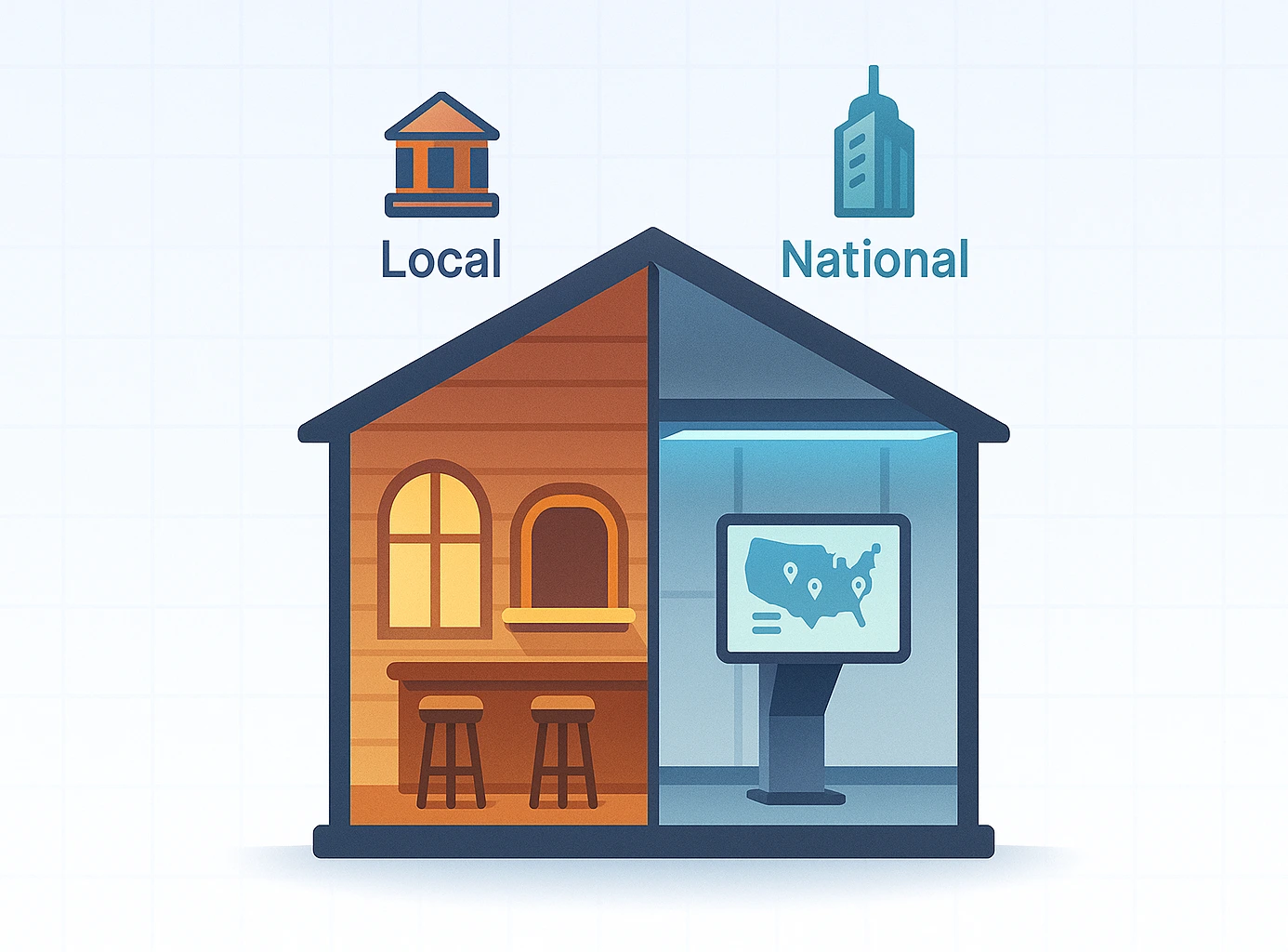
Choosing between local banks vs nationwide lenders can shape your costs, timeline, and flexibility. The first big choice is who you’ll work with—a local bank or a nationwide lender. Both options have pros and cons, and the best fit often depends on your situation and the specific property.
Local Banks: Flexible Financing Options
Local banks and credit unions offer several advantages, particularly for borrowers who value personalized service and a relationship-based approach when securing financing.
Pros:
- Relationship Lending: Local banks often prioritize long-term relationships with their customers. For instance, they may be more willing to work with you if you have an existing banking history.
- Flexibility: Local lenders may be more flexible in their underwriting criteria and willing to tailor loan terms to fit your needs.
- Local Market Expertise: Local banks possess in-depth knowledge of the local real estate market, allowing them to better assess the viability of your investment.
- Faster Approval Process: In some cases, local banks can offer a quicker approval process compared to larger institutions.
- Community Focus: Supporting local businesses often aligns with their mission.
Cons:
- Limited Loan Products: Local banks may offer a narrower range of loan products compared to nationwide lenders.
- Higher Interest Rates: While not always the case, local banks may have slightly higher interest rates due to their smaller scale.
- Geographic Restrictions: Local banks typically only lend within their immediate geographic area.
- Stringent Requirements: While flexible, they often have stricter requirements for reserves or personal financial strength.
- Smaller Loan Amounts: They may not be able to handle very large loan requests.
Who are Local Banks Best For? Small business owners who plan to occupy the commercial space, borrowers with long-standing banking relationships, and investors in niche neighborhoods often see the best fit with local banks. If you value hands-on service and flexibility for unique property situations, a community lender may be your most responsive partner.
Nationwide Lenders: Diverse Financing Solutions
Nationwide lenders, including large banks and specialized commercial lenders, offer a different set of advantages for mixed-use property financing.
Pros:
- Wider Range of Loan Products: Nationwide lenders offer diverse options, including SBA loans, commercial mortgages, and bridge loans.
- Competitive Interest Rates: Due to their scale, they often provide more competitive rates.
- Larger Loan Amounts: They can handle substantial loans for mixed-use properties.
- Established Underwriting Processes: Standardized processes provide clarity and predictability.
- Access to Capital Markets: Greater access allows funding for a wider range of projects.
Cons:
- Less Flexibility: Nationwide lenders have rigid underwriting criteria and are less likely to deviate.
- Bureaucracy: The application process can be more time-consuming.
- Impersonal Service: You may experience less personalized service compared to local banks.
- Less Local Market Knowledge: They may lack the nuanced expertise of local banks.
- Slower Approval Process: Larger application volumes can delay approvals.
Who are Nationwide Lenders Best For? Experienced investors taking on larger projects usually benefit from the broader product menu and pricing of national lenders. If you’re prioritizing competitive rates in major markets or need a specific program like SBA or CMBS, a nationwide lender typically offers the best match.
Key Loan Terms to Understand
Navigating financing for mixed-use properties requires familiarity with common terms. Additionally, here’s a glossary of essential terms to guide your financing journey:
- Loan-to-Value (LTV): The ratio of the loan amount to the appraised value of the property. A lower LTV typically results in better terms.
- Debt Service Coverage Ratio (DSCR): A measure of the property’s ability to cover its debt obligations, typically requiring a DSCR of at least 1.2.
- Net Operating Income (NOI): The property’s revenue minus operating expenses, a key profitability metric.
- Capitalization Rate (Cap Rate): The rate of return based on the property’s income, calculated by dividing NOI by market value.
- Amortization Schedule: The payment schedule showing principal and interest over the loan term.
- Loan Term: The repayment duration of the loan.
- Interest Rate: The percentage charged on the outstanding loan balance.
- Points: Upfront fees, expressed as a percentage of the loan amount (one point equals 1%).
- Prepayment Penalty: A fee for paying off the loan early.
- Recourse vs. Non-Recourse Loan: Recourse loans allow lenders to pursue personal assets if you default; non-recourse limits recovery to the property.
- SBA Loan: A loan guaranteed by the Small Business Administration, ideal for mixed-use properties where the borrower occupies commercial space. Visit the SBA’s official 7(a) loan page for details.
- Commercial Mortgage-Backed Securities (CMBS): Commercial loans securitized and sold to investors.
Loan Approval Differences Between Local and National Lenders
Understanding the loan approval differences between local and national lenders may help you avoid delays and extra paperwork.
Local Banks:
- More Emphasis on Relationships: For instance, they value your banking history and may be more lenient with a strong track record.
- Manual Underwriting: This allows flexibility and consideration of individual circumstances.
- Local Market Knowledge: They understand local real estate nuances, enhancing investment viability assessments.
- Faster Turnaround Times: Less bureaucracy can speed up approvals.
Nationwide Lenders:
- Standardized Underwriting: They use automated systems and standardized criteria.
- Emphasis on Data and Metrics: Metrics like credit score, LTV, and DSCR are prioritized.
- Less Flexibility: They rarely deviate from standard terms.
- Slower Turnaround Times: Bureaucracy can delay approvals.
Modern Lender Comparison Chart
Here’s a comparison chart summarizing the key differences between local banks and nationwide lenders for mixed-use property financing.
| Feature | Local Banks | Nationwide Lenders |
|---|---|---|
| Relationship Focus | High (Personalized service) | Low (Impersonal, process-driven) |
| Flexibility | High (Negotiable terms) | Low (Standardized terms) |
| Local Expertise | High (In-depth market knowledge) | Moderate (General market knowledge) |
| Loan Products | Limited (Traditional mortgages) | Wide Range (SBA, CMBS, bridge loans) |
| Interest Rates | Moderate to High | Competitive |
| Loan Amounts | Smaller | Larger |
| Approval Speed | Faster | Slower |
| Down Payment | Moderate to High (May require higher reserves) | Moderate |
| Best For: | Small business owners, niche markets | Experienced investors, large projects |
| Fit Indicator | Good (For the right borrower) | Okay (Depends on needs) |
Note: Local banks offer flexibility but may require higher reserves, while nationwide lenders provide competitive rates with less flexibility for mixed-use financing.
Preparing for the Loan Application Process
Solid paperwork makes mixed-use financing far less stressful. Regardless of your lender choice, preparing thoroughly for a mixed-use property loan application is essential. Subsequently, here are key steps to take:
Key Documentation for Mixed-Use Financing
- Assess Your Financial Situation: In addition, review your credit score, income, assets, and liabilities. Use our free mortgage calculator to estimate payments.
- Develop a Business Plan: Create a comprehensive plan outlining your vision, target market, revenue projections, and expense forecasts.
- Gather Financial Documents: Compile tax returns, bank statements, profit and loss statements, and balance sheets.
- Obtain a Property Appraisal: Hire an appraiser experienced in mixed-use properties to determine fair market value.
- Secure a Property Inspection: Conduct a thorough inspection to identify issues or repairs.
- Shop Around for the Best Rates: Compare loan terms, interest rates, and fees from multiple lenders.
- Be Prepared to Negotiate: Negotiate terms to secure the best deal.
Alternative Financing Options
Alternatively, while traditional bank loans are common, other options exist:
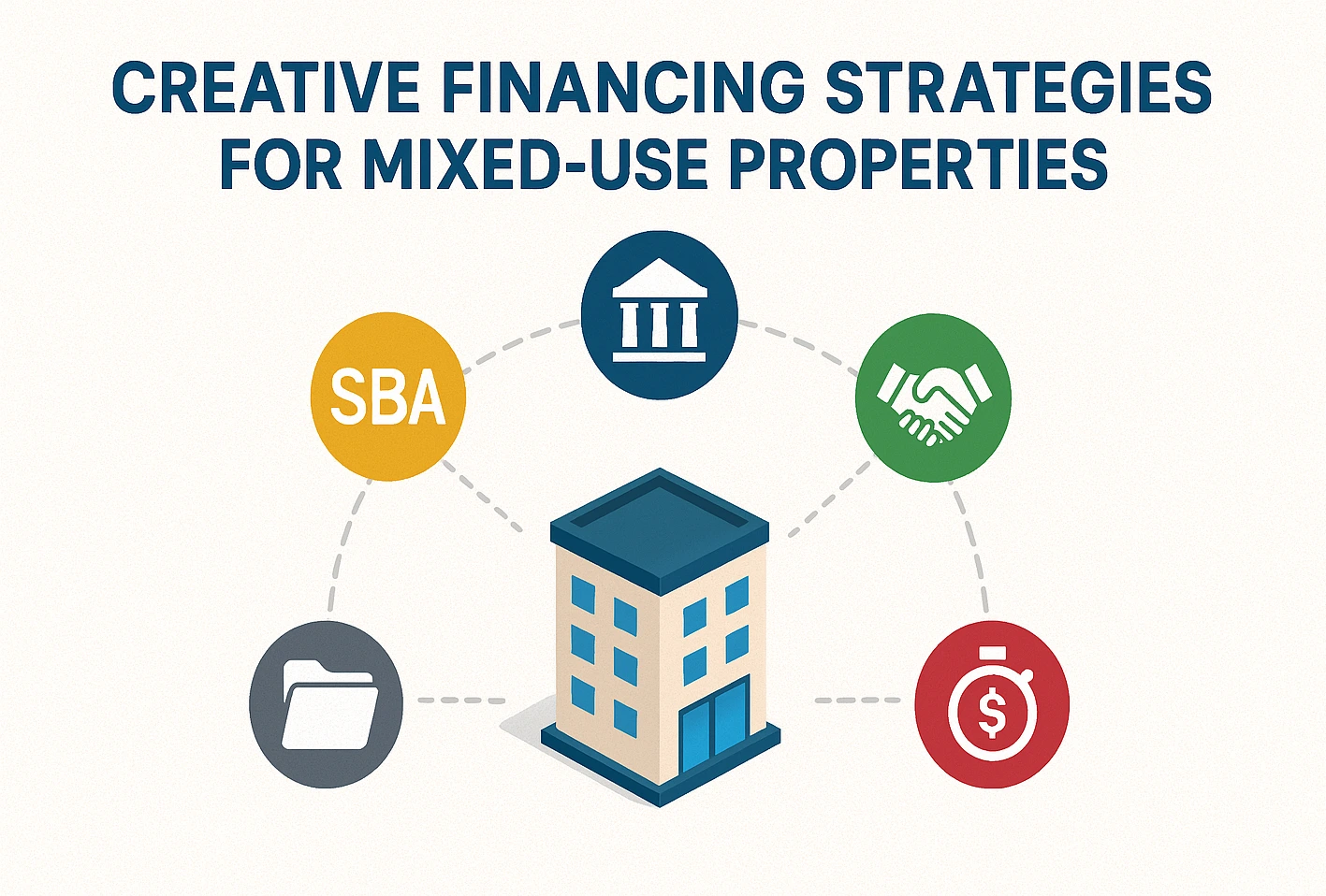
- Hard Money Loans: Short-term loans from private lenders, used for fix-and-flip projects, with higher rates and fees.
- Private Equity: Raising capital from investors in exchange for property equity.
- Seller Financing: The seller provides financing to the buyer.
- Crowdfunding: Raising capital through online platforms.
Maximizing Your Chances of Loan Approval
Hence, to increase your chances of securing a mixed-use property loan, consider these tips:
- Improve Your Credit Score: A higher score reduces the lender’s risk.
- Increase Your Down Payment: A larger down payment lowers the LTV, making you less risky.
- Strengthen Your Business Plan: A compelling plan demonstrates market understanding and income potential.
- Highlight the Property’s Potential: Emphasize unique features, location, and growth potential.
- Address Any Red Flags: Proactively address lender concerns.
- Work with a Qualified Real Estate Agent: An agent can help find properties and navigate the loan process.
Frequently Asked Questions
Conclusion
Ultimately, securing a mixed-use property loan requires careful planning, research, and understanding of financing options. By weighing the pros and cons of local banks and nationwide lenders, understanding key loan terms, and preparing diligently, you can increase your chances of obtaining the financing needed to achieve your investment goals. Choose a lender that aligns with your long-term objectives. Good luck!
This guide is educational and not financial, legal, or tax advice. Loan programs and eligibility can change. Consider speaking with a licensed mortgage or commercial lending professional before you make decisions.