
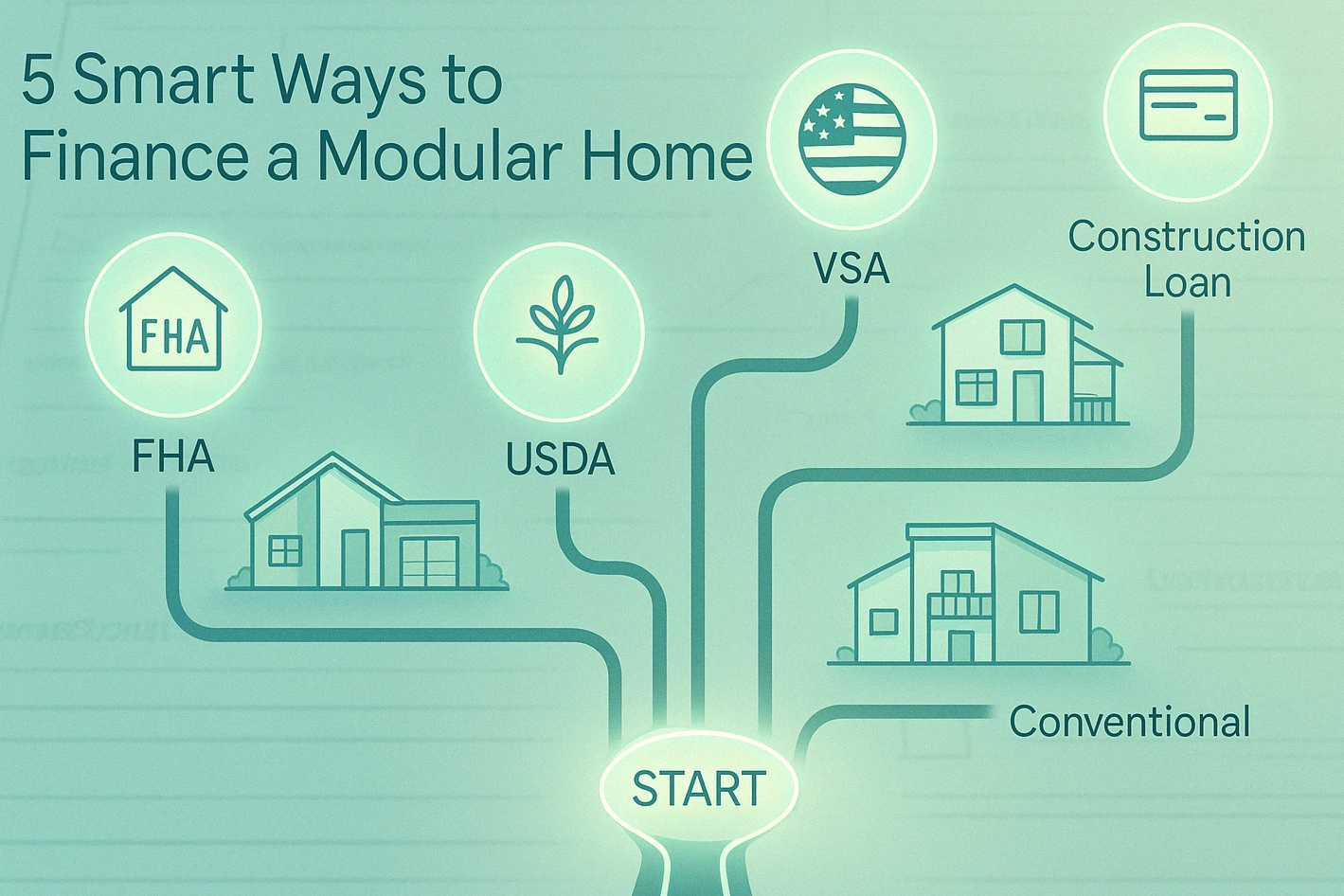
Modular homes combine price, speed, and customization. Finding the right loans for modular homes can be confusing because lenders treat factory-built homes a little differently. This guide compares your best options—FHA, VA, USDA, conventional, and construction-to-permanent—and shows how to qualify. Use the interactive tool below to see which program fits your credit, down payment, and location, then run the calculators to check payments. See our modular home loan guide for the big picture.
Quick tip: When comparing programs, look at rates, fees, and closing timelines from a few lenders.
This post contains affiliate links. If you buy through our links, we may earn a commission at no extra cost to you. Learn more.
Table of Contents
- Find Your Best Modular Home Loan (Interactive)
- Why Modular Home Loans Are Different
- 5 Best Loans for Modular Homes
- FHA Loans: First-Time Buyer Friendly
- VA Loans: Veteran Benefits
- USDA Loans: Rural Homeownership
- Conventional Loans: Strong Credit Option
- Chattel Loans: Non-Permanent Homes
- Construction-to-Permanent Loan (C2P) for Custom Builds
- Boost Your Approval Odds
- FAQ
- Your Modular Home Awaits
Find Your Best Modular Home Loan (Interactive)
Answer a few quick questions to see programs that typically match your credit, down payment, and location.
When exploring loan options, consider our free calculators to plan your budget.
Why Modular Home Financing Is Different
Modular homes are built in factories and assembled on site under the same local building codes as site-built homes. That’s why choosing the right loans for modular homes can feel a little different—lenders want proof of permanent installation and appropriate comps.
Real property vs personal property: if the home is set on a permanent foundation, titled with the land, and taxed as real estate, it’s typically eligible for traditional mortgages. Homes not permanently affixed are treated as personal property and usually need chattel financing.
- Property classification: If not permanently affixed, modular homes may be treated as personal property, restricting loan types.
- Appraisal hurdles: Lenders often require appraisers with modular expertise, which can delay approvals.
- Lender misconceptions: Some lenders mistakenly equate modular homes with manufactured homes, leading to stricter terms.
Pro Tip: Partner with a lender experienced in modular financing to navigate requirements smoothly.
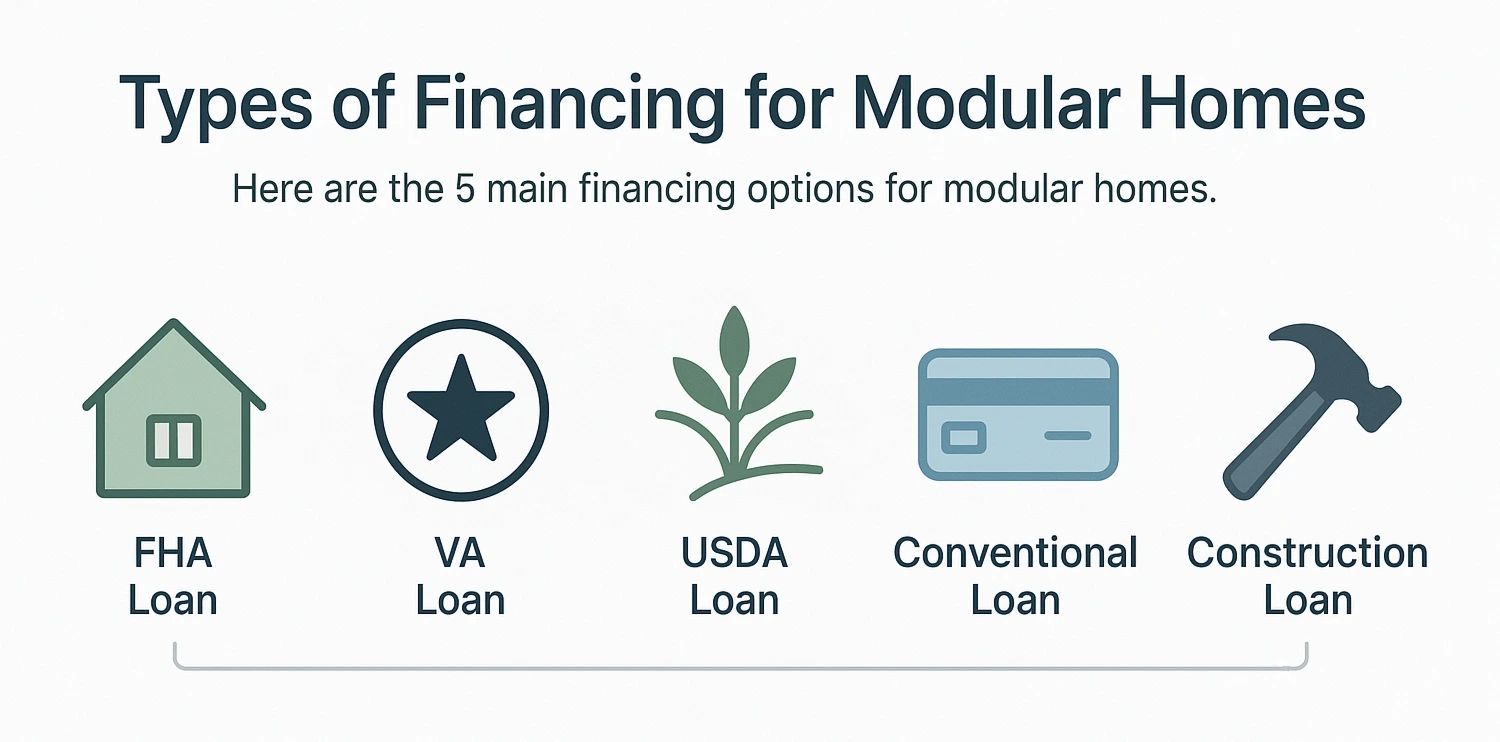
5 Best Financing Options for Modular Homes
Here are the best loans for modular homes and when each one fits—so you can pick with confidence.
1. FHA Loans: First-Time Buyer Friendly
FHA loans for modular homes can work well if you’ve got limited savings. You’ll typically need around 3.5% down and a ~580+ credit score, and your debt-to-income ratio may need to be near or under 43%. Expect an FHA appraisal and ongoing MIP. The home must be on a permanent foundation.
| Pros | Cons |
|---|---|
| Low down payment (often 3.5%) | Mortgage insurance (MIP) |
| Flexible credit (around 580+) | County-based loan limits |
| Fixed-rate options | Stricter appraisals |
2. VA Loans: Veteran Benefits
VA financing for modular homes often allows 0% down and no PMI for eligible borrowers. Keep credit around 620+ (lender overlays may vary), meet VA property standards, and obtain your COE. A funding fee may apply unless exempt.
| Pros | Cons |
|---|---|
| 0% down potential | VA funding fee (2.3–3.6%) unless exempt |
| No PMI | Military eligibility required |
| Competitive rates | Strict appraisal standards |
3. USDA Loans: Rural Homeownership
USDA loans for modular homes are a strong pick in eligible rural areas, sometimes with 0% down. Check the property map, keep credit near 640+ for smoother automated approval, and confirm income falls within local limits.
| Pros | Cons |
|---|---|
| 0% down potential | Eligible rural areas only |
| Generally low rates | Household income limits |
| Lower insurance costs | Upfront/annual guarantee fees |
4. Conventional Loans: Strong Credit Option
Conventional loans for modular homes are often best with ~620+ credit and at least 5% down. Putting 20% down can remove PMI. Keep DTI around 36% and verify the home is classified as real property for underwriting. See Fannie Mae’s Selling Guide on factory-built (modular) housing and the CTP financing overview for how these are typically handled.
| Pros | Cons |
|---|---|
| No PMI at 20% down | Stricter credit (~620+) |
| Flexible terms | Higher down payment |
| Competitive rates | Permanent foundation required |
5. Chattel Loans: Non-Permanent Homes
Useful when the home isn’t permanently affixed or sits on leased land. Approval can be fast and credit criteria flexible, though rates are usually higher and terms shorter. Plan for a larger down payment and understand depreciation risk.
| Pros | Cons |
|---|---|
| Fast approvals | Higher interest rates |
| Flexible credit | Shorter terms (often 15–20 years) |
| No land ownership needed | Potential depreciation |
Bonus: Construction-to-Permanent Loan (C2P) for Custom Builds
One-time construction-to-permanent financing may cover land, site prep, foundation, and the home, then convert to a mortgage after the set. Lenders often want ~680+ credit, detailed plans, a licensed contractor, periodic inspections, and a cushion for overruns.
| Pros | Cons |
|---|---|
| Covers full construction | Typically requires ~680+ credit |
| Converts to mortgage | More complex (inspections/draws) |
| Design flexibility | Higher upfront costs |
Boost Your Approval Odds
Credit & budget: Pull your reports at AnnualCreditReport.com, fix any errors, and keep utilization under 30%. Use our Home Affordability and Mortgage calculators to set a realistic price range and payment. Paying down revolving balances often moves the needle fastest and can improve pricing.
Lender readiness: Ask lenders how many modular closings they’ve handled and whether they support construction-to-perm. Get pre-approved early—it clarifies your numbers, surfaces any issues sooner, and strengthens offers.
These steps can strengthen your modular mortgage application.
Frequently Asked Questions
Your Modular Home Awaits
“Financing becomes straightforward once you match the program to your credit, down payment, and property setup.”
With the right plan, a modular home is within reach. Compare programs, run the numbers with the calculators, and secure pre-approval before you shop. Start with the tool above to see which option fits today.
This article is educational and not financial, legal, or tax advice. Mortgage program availability and requirements change by lender and location. Always verify current terms with your lender and consult qualified professionals before making decisions.